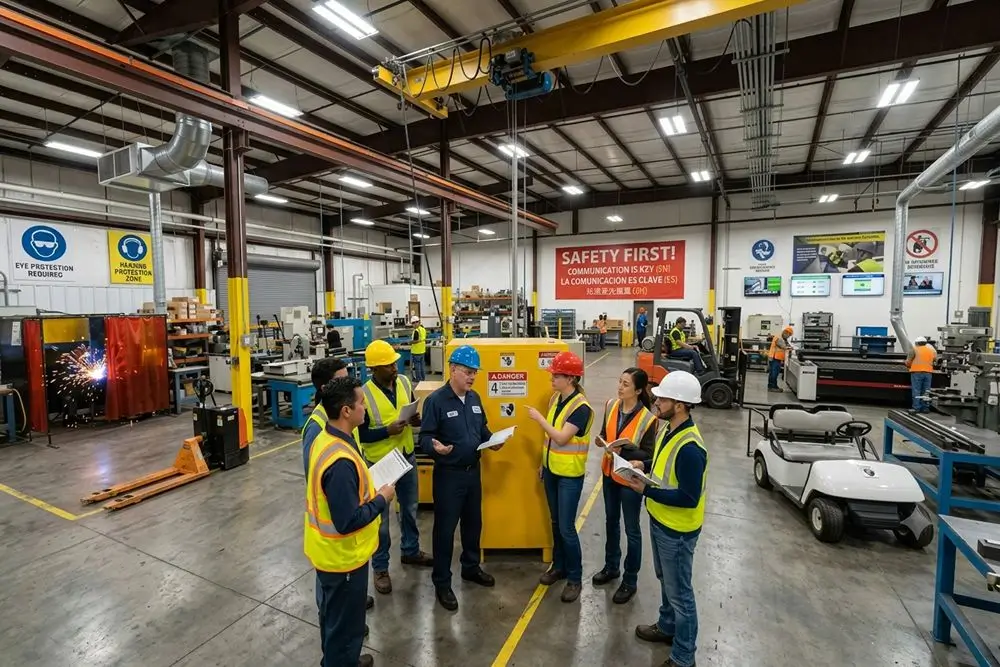
OSHA Interview Practice: Questions & Answers
Whether you're applying for your first safety position or advancing into an Environmental Health and Safety (EHS) role, preparing for an OSHA interview can significantly improve your chances of success. Employers want candidates who not only understand OSHA regulations but can also identify workplace hazards, promote safe work practices, and respond effectively to real-world safety challenges. A strong interview demonstrates both your technical knowledge and your ability to apply safety principles in the workplace.
This guide covers 20 commonly asked OSHA interview questions along with sample answers to help you prepare with confidence. You'll also learn what hiring managers typically look for, how to approach behavioral and situational questions, and practical tips to make a positive impression during your interview. Whether you're pursuing a role in construction, manufacturing, warehousing, or another industry, these questions will help you showcase your safety knowledge and readiness for the job.
Why OSHA Knowledge Matters in Job Interviews
Employers look for candidates who understand OSHA regulations because workplace safety is a critical part of maintaining productive and compliant operations. A solid understanding of OSHA standards shows that you can recognize hazards, follow safe work practices, and contribute to preventing workplace injuries and illnesses. It also demonstrates that you understand the importance of protecting employees while helping organizations meet their legal and regulatory responsibilities.
OSHA knowledge is valuable across a wide range of industries, including construction, manufacturing, warehousing, healthcare, transportation, and general industry. During an interview, employers often assess your familiarity with safety regulations to determine whether you can help reduce workplace risks, support compliance efforts, and promote a strong safety culture. Demonstrating this knowledge reflects professionalism, regulatory awareness, and a commitment to maintaining a safe work environment.
How to Prepare for an OSHA Interview
Successful OSHA interviews require more than memorizing regulations they require demonstrating how you would apply safety principles in real workplace situations. Before your interview, review the OSHA standards most relevant to the industry and position you're applying for, and refresh your understanding of common workplace hazards, risk assessments, incident reporting procedures, and emergency response protocols. Employers want to see that you can translate safety knowledge into practical decision-making.
It's also helpful to prepare examples from your previous work experience that showcase your problem-solving, communication, and commitment to workplace safety. Using the STAR (Situation, Task, Action, Result) method can help you answer behavioral questions clearly and confidently. Finally, review any OSHA certifications or safety training you've completed so you can discuss how they've prepared you to contribute to a safe and compliant work environment.
20 Common OSHA Interview Questions & Sample Answers
OSHA interview questions are designed to evaluate both your knowledge of workplace safety regulations and your ability to apply them in real-world situations. The following questions and sample answers cover the topics employers commonly ask to assess your technical expertise, problem-solving skills, and commitment to maintaining a safe and compliant workplace.
General OSHA Knowledge
Q: What is OSHA, and what is its primary purpose?
A: OSHA (Occupational Safety and Health Administration) is a federal agency that sets and enforces workplace safety and health standards. Its primary purpose is to prevent work-related injuries, illnesses, and fatalities by ensuring safe and healthy working conditions.
Q: What are an employer's responsibilities under OSHA?
A: Employers are responsible for providing a workplace free from recognized hazards, complying with OSHA standards, and providing necessary safety training, PPE, and hazard communication. They must also maintain required records and report certain workplace incidents.
Q: What rights do employees have under OSHA?
A: Employees have the right to work in a safe environment, receive safety training, report hazards without fear of retaliation, and request an OSHA inspection if they believe unsafe conditions exist.
Q: What is the General Duty Clause?
A: The General Duty Clause requires employers to provide a workplace free from recognized hazards that are likely to cause death or serious physical harm. It applies when no specific OSHA standard addresses a particular hazard.
Hazard Recognition & Risk Assessment
Q: How do you identify workplace hazards?
A: I identify workplace hazards by conducting regular inspections, observing work activities, reviewing incident reports, and speaking with employees. I also assess potential risks before new tasks or equipment are introduced.
Q: What steps would you take after discovering an unsafe condition?
A: I would assess the level of risk, take immediate steps to control or eliminate the hazard if possible, and report it to the appropriate supervisor. I would also ensure corrective actions are implemented and documented.
Q: How would you conduct a Job Hazard Analysis (JHA)?
A: I would break the job into individual steps, identify hazards associated with each step, and determine appropriate control measures. The goal is to reduce or eliminate risks before work begins.
PPE & Workplace Safety
Q: How do you determine the appropriate PPE for a task?
A: I determine the required PPE by conducting a hazard assessment and identifying the risks associated with the task. The selected PPE should meet OSHA requirements and provide adequate protection for the specific hazards.
Q: What are the most common causes of workplace accidents?
A: Common causes include inadequate training, failure to follow safety procedures, slips, trips, and falls, improper use of equipment, and poor housekeeping. Many of these incidents are preventable through effective safety programs.
Q: How do you encourage employees to follow safety procedures?
A: I lead by example, provide regular safety training, explain the importance of safe work practices, and encourage open communication. Recognizing safe behavior and addressing concerns promptly also helps build a strong safety culture.
Incident Response & Emergency Preparedness
Q: What should you do immediately after a workplace accident?
A: My first priority is to ensure the injured person receives medical attention and the area is made safe to prevent further harm. I would then report the incident, secure the scene if necessary, and begin the reporting process.
Q: How do you investigate a workplace incident?
A: I would gather facts by interviewing witnesses, examining the scene, reviewing documentation, and identifying the root cause. The goal is to implement corrective actions that prevent similar incidents from occurring again.
Q: What information should be included in an incident report?
A: An incident report should include the date, time, location, individuals involved, description of the incident, injuries or damages, witness statements, and any corrective actions taken or recommended.
OSHA Standards & Compliance
Q: What is Lockout/Tagout (LOTO)?
A: Lockout/Tagout (LOTO) is a safety procedure used to isolate and de-energize machinery before maintenance or servicing. It prevents the unexpected startup or release of hazardous energy that could injure workers.
Q: Explain the hierarchy of controls.
A: The hierarchy of controls is a method for reducing workplace hazards by prioritizing the most effective control measures. The order is elimination, substitution, engineering controls, administrative controls, and personal protective equipment (PPE).
Q: Why are safety inspections important?
A: Safety inspections help identify hazards before they cause injuries or property damage. They also support OSHA compliance, improve workplace safety, and ensure corrective actions are taken promptly.
Behavioral & Situational Questions
Q: Tell me about a time you identified a safety hazard.
A: During a routine inspection, I noticed an unprotected trip hazard in a high-traffic area. I reported it immediately, ensured it was corrected, and helped prevent a potential workplace injury.
Q: How would you handle an employee who refuses to wear PPE?
A: I would speak with the employee to understand the reason for their refusal, explain the safety risks and OSHA requirements, and reinforce company policy. If the issue continued, I would follow the organization's disciplinary procedures.
Q: What would you do if a supervisor ignored a serious safety violation?
A: I would respectfully raise the concern again and explain the potential risks and OSHA implications. If the hazard remained unaddressed, I would follow the company's reporting procedures to ensure worker safety is protected.
Q: Why do you want to work in Environmental Health and Safety?
A: I'm passionate about creating safer workplaces and helping prevent injuries before they occur. An EHS career allows me to combine problem-solving, regulatory knowledge, and employee education to make a positive impact on workplace safety.
Conclusion
Preparing for an OSHA interview is about more than memorizing regulations—it's about demonstrating that you can apply safety principles to real workplace situations. Employers look for candidates who understand OSHA standards, communicate effectively, solve problems proactively, and are committed to creating a safe and compliant work environment. Practicing common interview questions can help you answer with greater confidence and professionalism.
To strengthen your qualifications, consider completing or refreshing your OSHA 10-Hour or OSHA 30-Hour training before your interview. These certifications not only enhance your knowledge of workplace safety but also show employers that you're committed to continuous learning and professional development. With thorough preparation and a safety-first mindset, you'll be well-positioned to stand out in your next OSHA or EHS job interview.
Related Posts
Understanding OSHA’s Mission
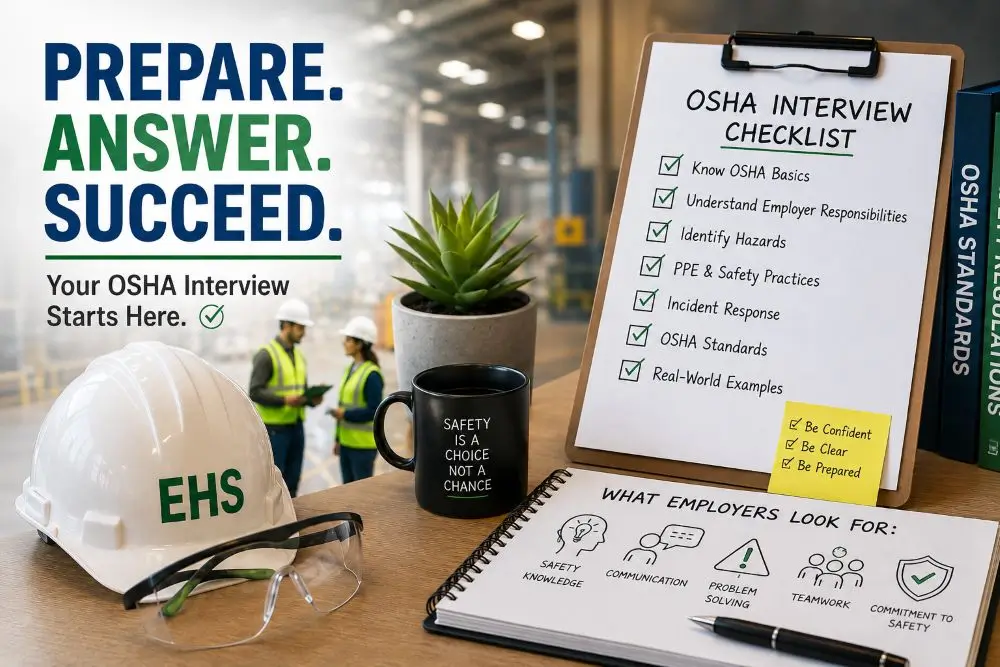
OSHA Interview Practice: Questions & Answers