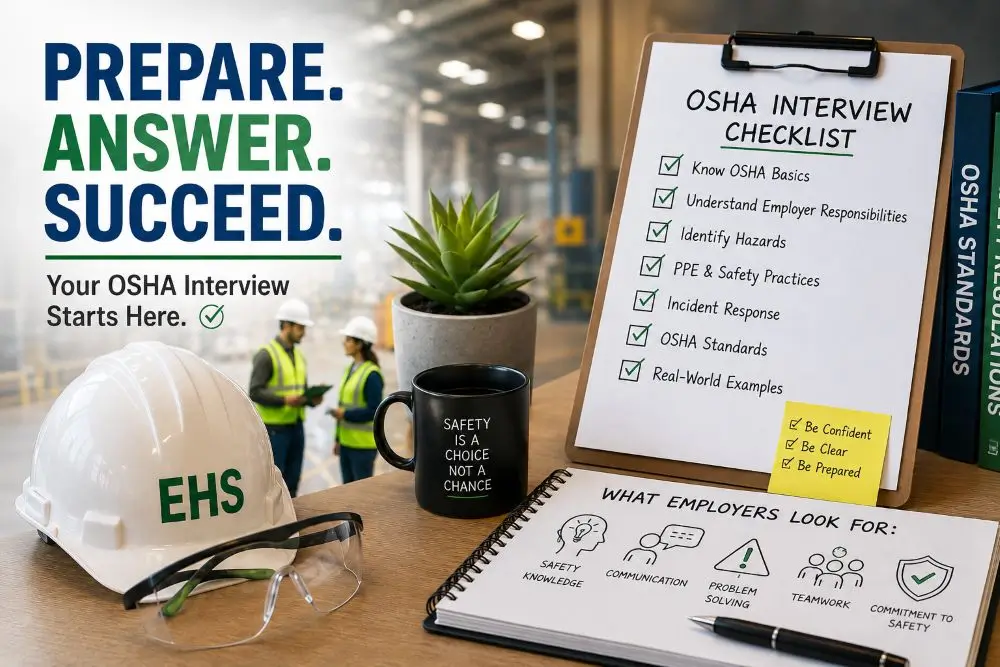

What are Different Types of OSHA trainings? (Updated for 2026)
High-risk industries such as construction, manufacturing, warehousing, and healthcare hold workers’ safety paramount. Be it in the minds of the worker or the supervisor, making the workplace safe can be at the top of the list of priorities, but most importantly, a legal requirement also.
One such way to seal the commitment towards safety is through OSHA training – but what is OSHA training, what types are there, and to what extent do they affect your career?
In the article below, we will break down the different types of OSHA trainings and how they can be used to enhance your workplace skills and job prospects.

What is an OSHA training?
If we talk about OSHA training, we can say that it is a kind of proof that you have completed some sort of training on workplace safety and hazards. The training that you will earn can belong to any area, including construction, disaster response, the maritime industry, or the general industry.
The training will cover important topics like workplace hazards, incident investigations, and record-keeping. Once you finish the program, whether you’re an employee or a trainer, OSHA provides a training and a card issued by the Department of Labor (DOL).

In the construction and manufacturing sectors, the moment employers say “OSHA training” or say someone is “OSHA trained,” they are actually talking about them wanting a current certificate of completion from OSHA Outreach Training.
This training is also often referred to as “OSHA 10 training” or “OSHA 30 training,” and it has a Department of Labor (DOL) card associated with it. And, to set the record straight, OSHA itself has clarified that Outreach Training is not a form of training.
Providers are strictly penalized for indicating their training as “trained.” Many employers still require OSHA Outreach on a resume. If you do nothing else, list this training on your resume, and use the full name of the program you completed since this information is included on your certificate.
Types of OSHA trainings
As we have already cleared, OSHA does not offer trainings in the traditional manner, but there are many different courses and OSHA training programs that will be required in different sectors. The most common types of OSHA trainings that are required are as follows
1. OSHA 10-Hour training
This training is specifically started for those workers who have just started learning about safety and are considered entry-level workers. This kind of course will cover basic safety and health hazards related to their job and field. This course is available in two main categories:
OSHA 10-Hour Construction: deals with construction site hazards, such as fall protection, electrical safety, and personal protective equipment (PPE). This training is also available in the Spanish language.
OSHA 10-Hour General Industry: Geared towards manufacturing, warehousing, and other general industries, this course addresses a variety of workplace safety topics, including hazard communication, ergonomics, and machine safety.
2. OSHA 30-Hour training
This course is specifically designed for those workers who have supervisory roles, such as foramen, engineers, and safety officers. The covers give more in-depth knowledge about occupational hazards and responsibilities. The course is also available in two categories:
OSHA 30-Hour Construction: The course is all about construction site hazards and leadership roles
OSHA 30-Hour General Industry: This course is about hazard management in industries like manufacturing, healthcare, and warehousing.
3. OSHA Maritime training
This training course is only suitable for workers in the maritime industry, including shipyard workers, marine terminal employees, and longshoremen. Maritime safety hazards differ from those in construction and general industry, and this training ensures workers are prepared to handle them.
4. HAZWOPER training
The HAZWOPER card is an endorsement meant for people who handle hazardous substances. A valid HAZWOPER card is important for any worker who is involved in hazardous waste industries, emergency spill response, or environmental cleanup.
5. OSHA Safety Professional training
OSHA has actually accredited several training programs for safety professionals, which include the trained Safety and Health Official (CSHO). The course mainly includes 100 to 400 hours of coursework for those whose jobs are solely dedicated to the enforcement of safety measures in the workplace.
What Are the Benefits of OSHA Certificates?
An OSHA certificate can significantly boost your employability and career progression, especially in high-risk industries. Here are some of the key benefits:
1. Increased Job Opportunities
Many employers prefer or require job candidates to have completed OSHA Outreach training. A DOL card shows proof of training in following some basic safety regulations and commitment to maintaining a safe work environment. Some states and local jurisdictions, such as New York, Connecticut, and Nevada, require training with OSHA for certain types of work.
2. Reduced Workplace Accidents
The provision of safety training will reduce the possibility of accidents and deaths in the workplace. This is because by knowing and following OSHA guidelines, workers can recognize hazards before accidents happen. This means there is a chance of having a safer working environment for all.
3. Legal adherence
Some of the states require personnel to have an OSHA DOL card so as to work on certain projects like public works. Even though that is not a legal requirement, having an OSHA training guarantees you are conversant and able to adhere with OSHA regulations, which can protect you and your employer from being asked for fines or getting into judicial trouble.
4. Career Advancement
Completing an OSHA training program and earning a DOL card can help you stand out to employers when applying for promotions or leadership roles. Supervisors and safety managers who are OSHA-trained are often considered for higher-paying positions.
How Can I Get OSHA training?
Although OSHA does not provide training, it has authorized many trainers and institutions in the country to do so. And here is the way you can become OSHA trained:
1. Choose the Right Course
Determine First If You Require OSHA 10-Hour or OSHA 30-Hour training. Your job, industry, and sometimes the state in which you work will decide which program you are going to need: a 10-hour course or a 30-hour course.
Workers typically require the 10-hour course, while supervisors require the 30-hour course. If you are working in a specialized area, then you may need a specialty course, such as maritime or hazardous waste.
2. Select a Legitimate Training Provider
Ensure that your training provider is OSHA-authorized. Many educational institutes, including universities, community colleges, and private companies, offer OSHA training.
Online training is also an option; that method provides flexibility and cost-effective training for working students. Some will. However, scam people, and you should avoid such providers.
3. Complete the Course
OSHA has time requirements that must be met. OSHA only allows a certain amount of training that can be accomplished in one day, so technically, the 10-hour course must take place over at least two days, and the 30-hour course takes at least four days to complete in its entirety. Upon completion, you will receive a certificate of completion and a DOL card…
C o n c l u s i o n
While there is technically no such thing as “OSHA training,” the term has come to represent the vital safety training offered through OSHA’s Outreach Program. With multiple types of OSHA training available—ranging from the 10-hour and 30-hour courses to HAZWOPER and Maritime trainings—workers and supervisors can ensure they are properly educated on workplace safety.
By choosing the right course and provider, you can enhance your safety knowledge, improve your job prospects, and contribute to a safer work environment for everyone.
Related Posts

Safety Observation in the Workplace (With Examples)

Understanding OSHA’s Mission